
Beyond the Listing: Why 1 in 4 London Buyers Need a Street-Level Report
Think a Saturday afternoon viewing gives you the full picture? Discover why 1 in 4 of London buyers face property regrets, and how to spot the location blind spots automated portals completely miss.
THE BRIEFINGS
6/18/20263 min read
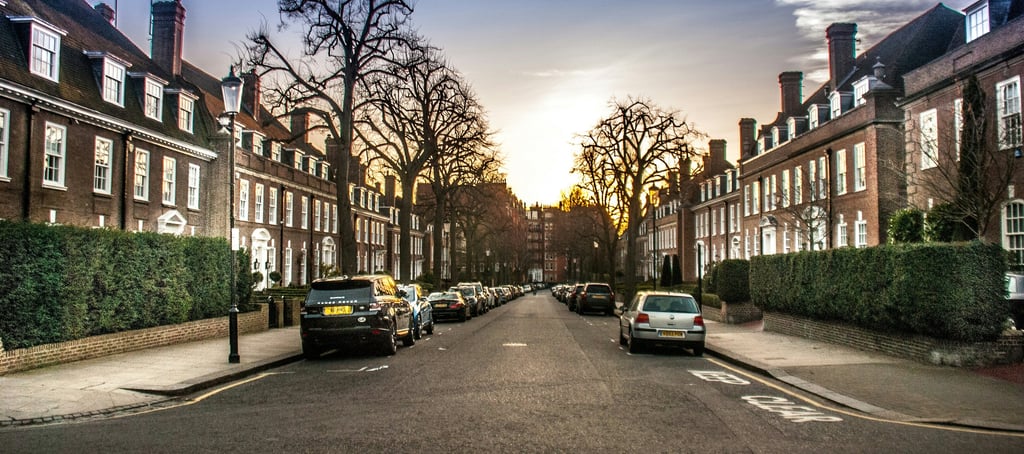
It is a scenario countless homebuyers have lived through. They move into their new property, unpack boxes throughout the day, and suddenly realise the neighbourhood has a completely different energy than it did during a brief Saturday afternoon viewing. Everything on paper seemed ideal - excellent transport links and a solid catchment area for local schools. Yet, within a matter of days, weeks or months, the actual, fluid lived experience of the street turns out to be far from what they hoped.
According to a 2025 survey carried out by the HomeOwners Alliance, over a third of UK buyers regret aspects of the home they purchased. Among homeowners aged 18-34, that figure is two-thirds (63%), with 27% explicitly unhappy with their chosen location. Focus specifically on London, and property owners are even more likely to suffer from buyer’s remorse, with just over half of the sample reporting regrets. While buyers frequently expect to compromise on certain property features during a search, compromising on location carries a uniquely heavy toll. A study by Which? found that 25% of buyers ultimately whished they had held out for their preferred area.
The Anatomy of Location Remorse
Unsurprisingly, a primary reason of property regret is budgeting (23%), as steep conveyancing fees and high mortgage costs routinely siphon away disposable income and renovation funds. Other common regrets stem from structural compromises, such as bedroom sizes or a lack of outside space.
However, location-specific issues account for a substantial 14% of London buyer regrets, with the most notable complaint being “no sense of community”. It seems like an obvious question to ask when evaluating a major investment: “What is the area really like?” Yet very few buyers have the tools or time to truly investigate the answer.
This oversight is particularly striking given recent demographic shifts. A growing number of modern homebuyers are no longer just purchasing brick-and-mortar; they re investing in a 500-meter radius that aligns with their lifestyle and aspirations. For these buyers, the immediate area comes first, and the house itself follows. They place a premium on livability, hyper-connectivity, and an authentic sense of place. They want familiar shops, independent cafes, and leisure amenities within short walking distance. While a “neighbourhood vibe” can feel abstract, it is anchored by tangible public infrastructure-parks, libraries, and vibrant community spaces where people can naturally interact.
The Due Diligence Gap
Why, then, does location regret remain so pervasive? The data points not to a single mistake, but to a challenging collision of modern lifestyle dynamics.
One of the primary challenges is that today's high-earning, time-poor professionals work intense hours. They simply lack the spare capacity to physically scope a property's immediate vicinity across multiple critical peak and off-peak operational windows.
When you pair this time crunch with the shifting priorities of the younger demographic, the challenge intensifies. As the statistics show, younger buyers and the emerging Gen Z workforce are entering the market with incredibly high standards for their surroundings—prioritising liveability, hyper-local amenities, and an authentic sense of community within a 500-meter radius. Trying to verify whether a street truly aligns with those deep lifestyle values during a brief, high-pressure Saturday afternoon viewing creates an immense margin for error.
Furthermore, today’s abundance of automated property portals can create a false sense of security. While an algorithm can effortlessly map nearby train stations or calculate historical price growth, it completely overlooks these fluid human variables. Automated data simply cannot flag fluctuating nighttime ambient noise, shifting commuter path dynamics, localized cleanliness issues, or imminent infrastructure changes. The resulting due diligence gap is where the mismatch between a listing and reality occurs.
Ground-Truthing Your Next Purchase
The solution requires a shift in how we approach property due diligence. Just as a homebuyer wouldn't dream of exchanging contracts without commissioning a chartered surveyor to check the structural integrity of the walls, the immediate vicinity requires the same independent verification.
Commissioning an independent, multi-phase vicinity audit is the single most effective way to eliminate "First-Night Fear". It provides objective, boots-on-the-ground intelligence, saving buyers from severe location remorse—or worse, a life-altering financial mistake. Ultimately, changing the interior layout of your property is a straightforward project; changing the neighbourhood you live in is impossible.
Are you evaluating a property but have mixed feelings about the surrounding area?
Contact Area Scope today to ensure your next move is backed by human-verified street intelligence.
Photo by Christian Vasile.
© 2026 Area Scope. All rights reserved.
Independent Property Area Intelligence.